

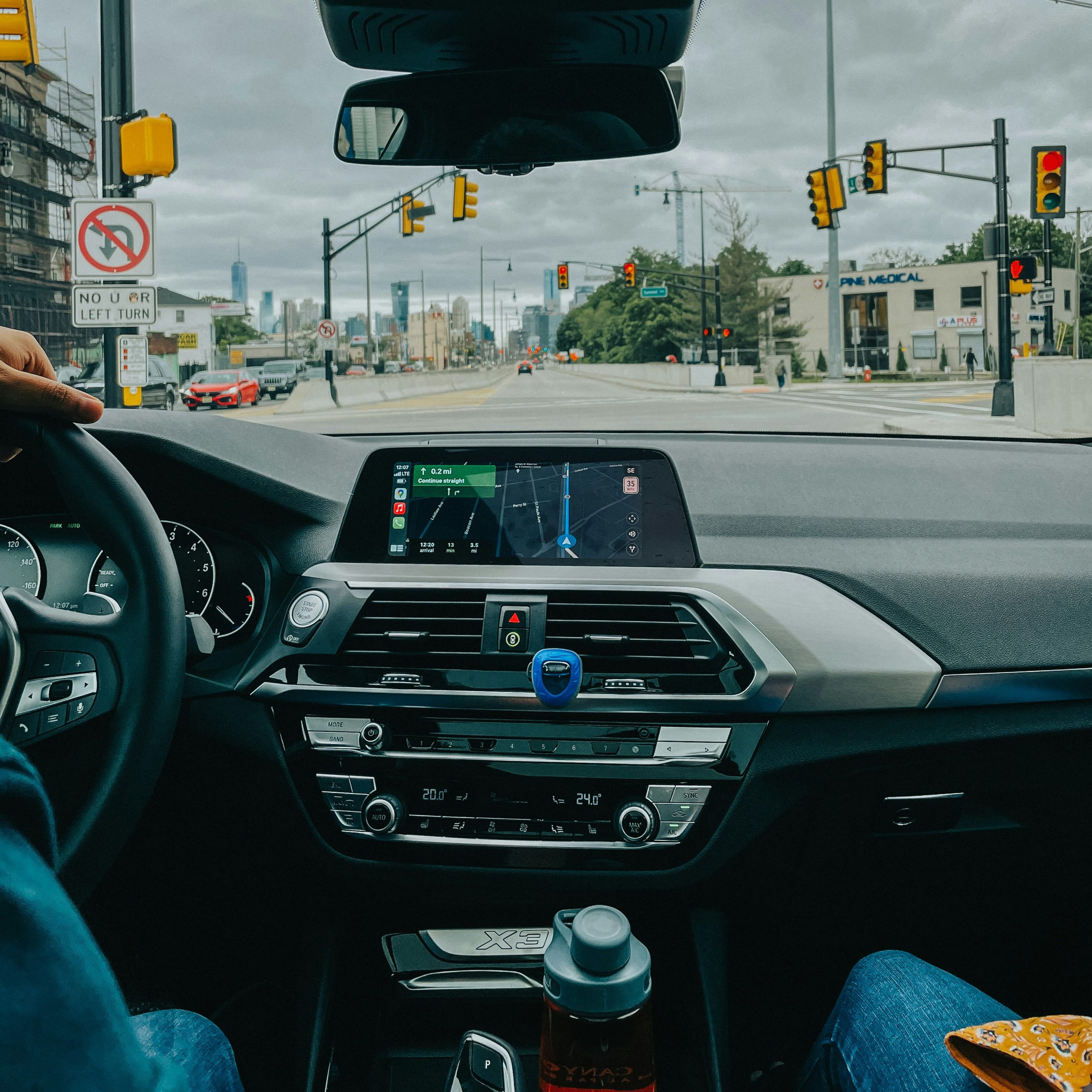
Automotive infotainment, waiting, and the cost of being almost connected

Then the music started. Not mine. Not hers. My son’s.
I watched the space between my wife’s eyebrows tighten—that small, precise expression that appears when something familiar stops making sense.

She wanted her route. She had planned it already. Apple Maps knew where we were going.
The car did not.
Music played anyway. Confident. Uninvited.
We stopped. We went through the menus. And to fix it, we had to leave CarPlay—exit into the car’s own operating system—like stepping out of a room to ask permission to re-enter it.
Source selection lived somewhere else. Device priority lived somewhere else. The logic that tied it together lived nowhere we could find.
The only thing that worked was starting over: delete every phone, remove every pairing, forget every connection.
Ten minutes passed. The road kept moving without us.
Nothing was broken. Everything was working as designed.
That’s the part that lingers.

The fix is the problem
There is a workaround, of course.
Pick one “owner” phone for the trip. Turn off Bluetooth on the others. Or disable auto-play. Or hard-wire only the device you want controlling navigation and audio.
It works.
But it also asks for the very thing these systems claim to reduce: vigilance.
You have to remember the ritual before the drive begins. You have to pre-negotiate who gets to be the car that day. You have to police the invisible rules of a system that was marketed as effortless.
And the moment you’re managing that, you’re already more distracted than you should be.
We bought these interfaces to keep our hands on the wheel and our eyes on the road. Then they made us become their administrators.
What should have happened
The car should know the difference between “paired” and “in charge.”
It should respect the route already running on-screen. It should ask once—clearly—who owns audio for this drive, and then keep that promise until the engine is off.
It should never require leaving CarPlay to do something as basic as choosing the source.
Because the cost isn’t inconvenience. The cost is attention.
Eventually, it connected. It always does.
But by then, whatever ease it promised had already passed us by.
The rest of the drive was quieter. Not because it worked—but because we stopped expecting it to.


Leave a Reply