


How AI changed the competition for instructional design software.

Imagine it’s 2007.
The iPhone calls Research In Motion.
BlackBerry answers.
“Thank you for calling. Your call is important to us. Please hold while we assist another BlackBerry customer.”
The iPhone waits.
BlackBerry keeps taking calls from existing customers.
The hold music keeps playing.
By the time someone finally comes back to the line…
…there isn’t much of a company left to answer the phone.
Act One
That story has played out more than once.
Kodak.
Blockbuster.
Nokia.
BlackBerry.
Not because their products suddenly became terrible.
Because they became exceptionally good at serving yesterday’s customers while tomorrow quietly became someone else.
I’m beginning to wonder if Articulate is standing in that same hallway.
This isn’t an article about hating Storyline.
I still build in it.
I know its variables, triggers, layers, states, JavaScript hooks, and quirks better than I’d like to admit. I know what bogs it down and makes it unusable at times.
But over the last eighteen months, something changed.
The competition isn’t Adobe anymore.
It isn’t iSpring.
It isn’t dominKnow.
It’s Anthropic.
It’s OpenAI.
It’s Gemini.
It’s every AI model that’s teaching instructional designers to solve problems that once required waiting for the next Storyline release.
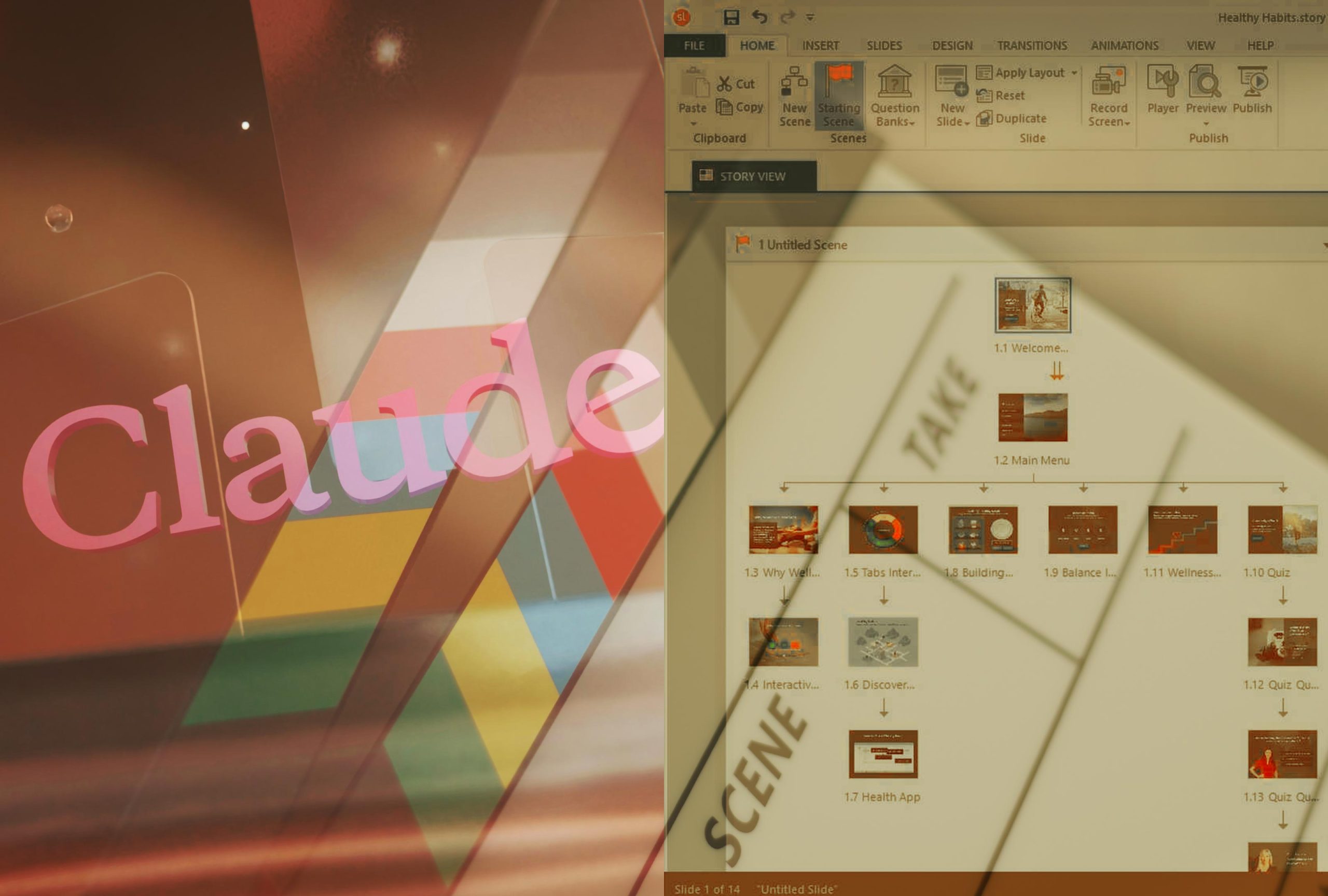
The most interesting thing AI has done isn’t that it writes code.
It’s that it has made instructional designers curious about code.
Meanwhile, Storyline’s release notes increasingly read like refinements rather than reimaginings: AI-generated images, narration, JavaScript animations, localization, accessibility improvements, and workflow enhancements.
Useful?
Absolutely.
Transformational?
I’m not convinced.
When customers are paying $1,749 a year whether they use the AI features or not, incremental improvements begin to feel like polishing the deck chairs while the definition of an authoring tool changes underneath them.
This isn’t a story about software falling behind.
It’s about a company answering yesterday’s phone while tomorrow keeps ringing.
Act Two
For nearly two decades, Storyline has been the Leatherman of eLearning.
Not because it was perfect.
Because it lowered the barrier to building rich interactions.
If you wanted variables…
Storyline.
If you wanted branching…
Storyline.
If you wanted simulations…
Storyline.
If you wanted JavaScript…
…eventually, Storyline.
Then AI happened.
Not as another feature.
As another way of thinking.

Act Three
Here’s a question I never thought I’d still be asking in 2026:
“Do you have a Windows machine?”
That’s not nostalgia.
That’s technical debt masquerading as product strategy.
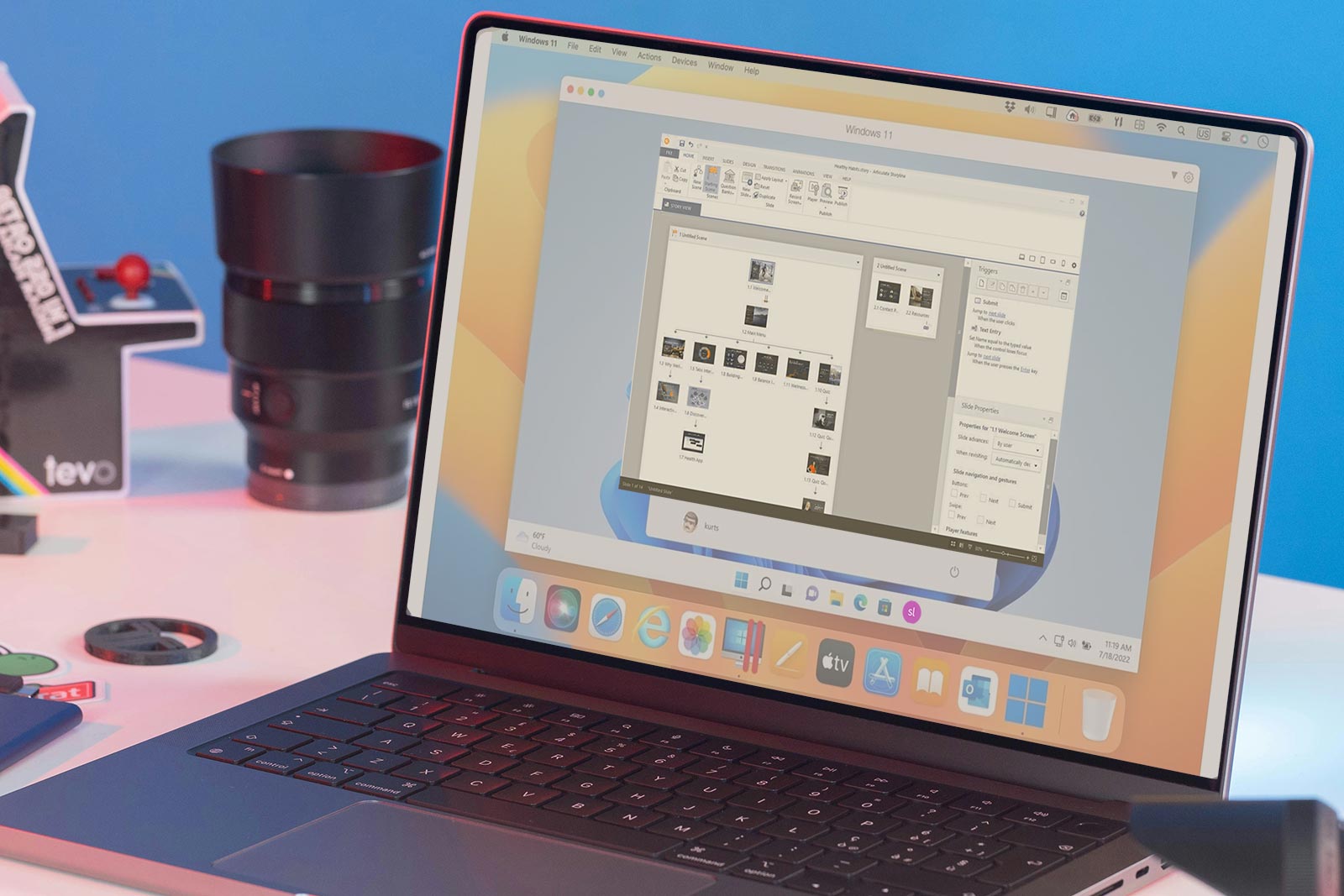
I develop on an Apple Silicon Mac.
To run Storyline, I pay for Storyline.
Then I pay for Parallels.
Then I run Windows.
Inside macOS.
To build HTML5.
In 2026.
Read that sentence again.
It’s almost performance art.
AI has quietly taught an entire generation of instructional designers that code isn’t something to fear.
It’s something to collaborate with.
The barrier isn’t syntax anymore.
It’s imagination.
Yet Storyline still treats code like it’s hidden behind a velvet rope.
No code editor.
No embedded JavaScript workspace.
No meaningful inspection of web objects.
No modern developer workflow.
Not because those things are impossible.
Because Storyline was designed for an era when most instructional designers weren’t expected to write code.
That assumption no longer holds.
And that’s a far stronger argument than simply saying, “They don’t have a Mac version.”
Storyline is still evolving.
The problem is that its users are evolving faster.

The company probably won’t be defeated by a better authoring tool.
It’ll be defeated by a better idea.
BlackBerry wasn’t beaten by a phone.
It was beaten by a touchscreen.
Kodak wasn’t beaten by another camera.
It was beaten by digital photography.
Blockbuster wasn’t beaten by another video store.
It was beaten by streaming.
Storyline won’t be defeated by another authoring tool.
It’ll be defeated by the idea that authoring no longer begins inside an authoring tool.
That’s the uncomfortable truth about every disruptive technology.
It rarely destroys the old tool.
It changes where people begin.
For twenty years, instructional design began by opening Storyline.
Increasingly, it begins by opening Claude, ChatGPT, or Gemini.
And that’s a very different phone call.

—IA

Leave a Reply